Empowering the Future: How Holistic MHPSS is Transforming Type 1 Diabetes Care for Youth in Uganda
Living with a chronic illness is a heavy burden for anyone, but for a child or adolescent, a diagnosis of Type 1 Diabetes (T1D) can completely upend their world. Beyond the physical demands of daily insulin injections and constant blood sugar monitoring, the psychological toll—ranging from severe anxiety and depression to social isolation and stigma—is immense. For too long, the intersection of mental health and chronic physical illness has been overlooked.
To bridge this critical gap, the Baitambogwe Community Healthcare Initiative (BACHI), in partnership with the Ministry of Health and supported by a USD 20,000 grant from the T1D Community Fund via Pangrama Global, launched a groundbreaking initiative in 2025. Titled “Provision of Mental Health and Psychosocial Support Services (MHPSS) for Type 1 Diabetic Children and Adolescents,” this project has spent the last year establishing a comprehensive, empathetic care system across three key Ugandan facilities: Jinja Regional Referral Hospital (JRRH), Iganga General Hospital (IGH), and the Kabukye Trust Diabetic Clinic.
Here is how a localized, holistic approach is radically changing outcomes for vulnerable youth and their families.
Building Capacity from the Ground Up
True sustainability starts with empowering those on the front lines. The project kicked off by aligning pediatric, psychiatric, and adolescent care clinicians through targeted staff orientations and inception meetings. By breaking down clinical silos, the team laid the groundwork for a unified care model.
Two core educational milestones drove this transformation:
- Empowering Clinicians: A intensive three-day training equipped 12 healthcare workers with specialized skills to recognize and manage the psychological dimensions of T1D. Clinicians were trained in culturally sensitive counseling techniques and standard screening tools like the SRQ-20 and SAD PERSONS.
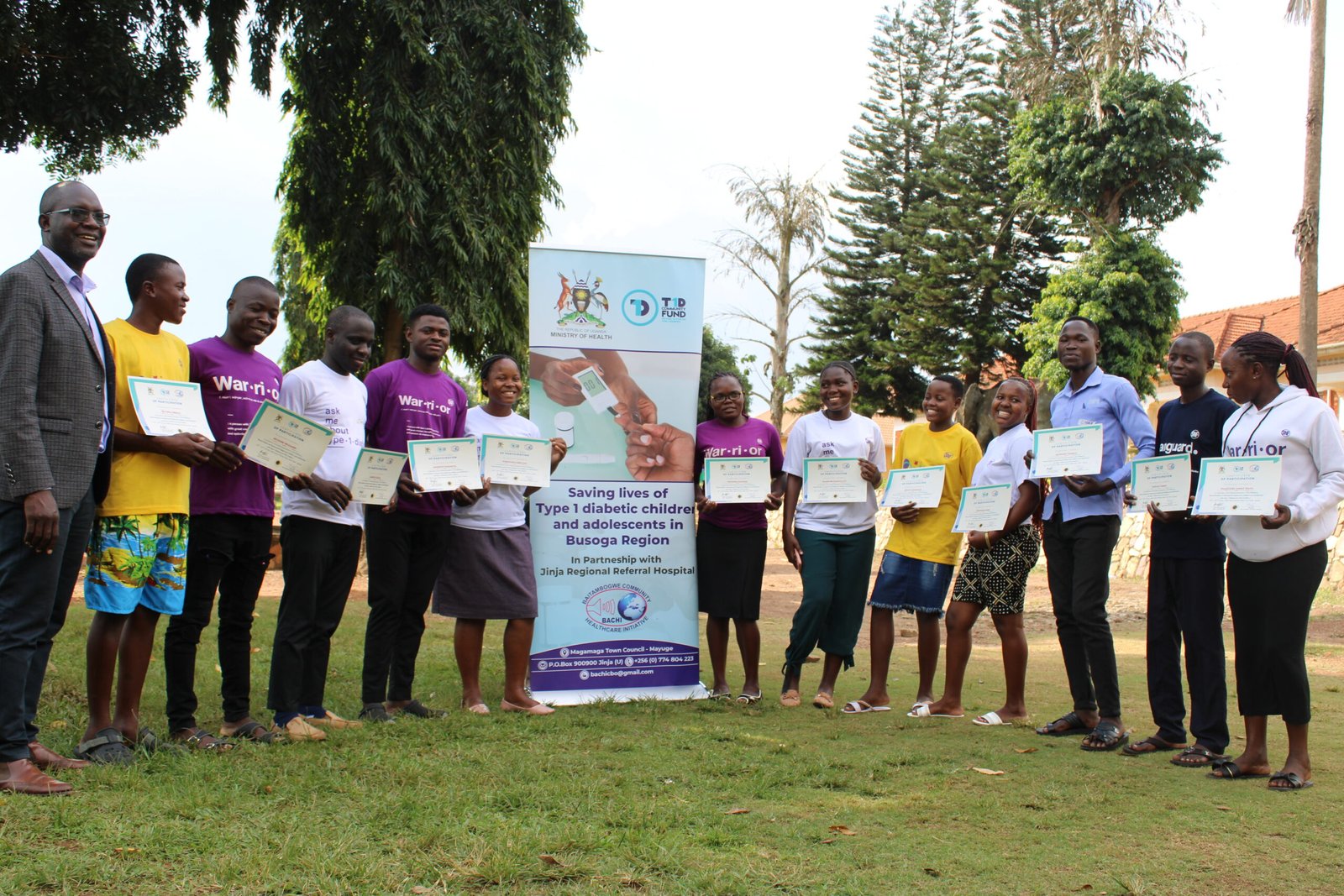
- Activating Peer Leaders: Adolescents themselves became champions of the cause. A separate three-day peer educator training prepared 12 young leaders to provide basic counseling, share lived experiences, reduce stigma, and safely guide their peers through referral pathways.
A Look Inside the Clinic: Real-Time Screenings and Lifesaving Support
By integrating MHPSS directly into routine monthly diabetes clinic days, mental health check-ins became as normalized as measuring blood glucose. During these clinic days, trained staff and peer educators actively screened youth for emotional distress, anxiety, depression, and suicidal ideation.
For youth identified with mild-to-moderate psychological challenges, health workers provided individual counseling sessions focused on building self-esteem, managing stress, and improving medication adherence. Adolescents experiencing severe psychiatric symptoms were immediately routed to specialized mental health clinicians for psychiatric review.
The power of this multidisciplinary approach was perfectly illustrated through the story of Isaac, a 15-year-old adolescent living with T1D and psychotic depression. After a devastating three-year dropout from treatment, Isaac reappeared in critical condition, facing severe family conflict and abandonment. Through a coordinated response spanning medical care, intensive counseling, caregiver insulin training, and child protection services, Isaac was successfully stabilized and reintegrated back into a continuous loop of community-based care.
Engaging the Home: Rewriting the Narrative Around Chronic Illness
A child’s health does not exist in a vacuum; it is shaped by the home environment. To strengthen family-based support networks, BACHI hosted critical caregiver meetings that reached 76 parents and guardians across the three participating facilities.
These dialogues were essential for two reasons: teaching positive parenting and practical insulin tracking, and directly confronting deep-seated cultural myths. Facilitators worked openly with families to dismantle dangerous misconceptions—such as attributing diabetes symptoms or mental health struggles to witchcraft or familial curses—which heavily contribute to social stigma and dangerously delay medical care. Caregivers walked away equipped to spot early warning signs of distress and advocate fiercely for their children’s well-being.
The Data Proves It: A Upward Trend in Emotional Well-Being
The impact of these combined strategies between July and November 2025 is nothing short of remarkable. Across all three tracking sites, data revealed a steady, profound decline in both depression and suicidal risk metrics among screened youth:
- Jinja Regional Referral Hospital (JRRH): Screenings peaked in September with 113 patients assessed. By November, the depression rate among screened individuals dropped to just 10% .
- Iganga General Hospital (IGH): Initial baseline assessments in August revealed staggering levels of distress, with 86% of youth screening positive for depression and 26% flags for suicidal risk. By November, those figures fell drastically to 20% and 5% respectively.
- Kabukye Trust: Depression levels among screened individuals steadily halved, dropping from 61% in September to 26% by November, while suicidal risk metrics successfully reached 0 by October.
In total, the initiative screened and provided life-altering psychosocial support to over 200 children and adolescents.
Confronting Challenges to Shape the Future
No pioneering health intervention is without its roadblocks. Over the course of the project, implementation teams navigated inconsistent cooperation from specific clinic staff, logistical hurdles brought on by overlapping facility schedules, and a recurring shortage of vital MHPSS supplies, particularly specialized psychotropic medications.
However, these challenges provide invaluable lessons for the future. They highlight a clear need for increased domestic funding, robust digital patient tracking systems, and expanded training for community health workforces to ensure no child slips through the cracks.
The Path Forward
The 2025 project report serves as a powerful proof of concept. When we treat a chronic illness like Type 1 Diabetes, we cannot afford to look only at blood sugar charts while ignoring the heart and the mind. By building community resilience, equipping peers, and healing families, BACHI and its partners have created a compassionate, repeatable care model—proving that holistic health isn’t just an ideal, but a lifesaving necessity